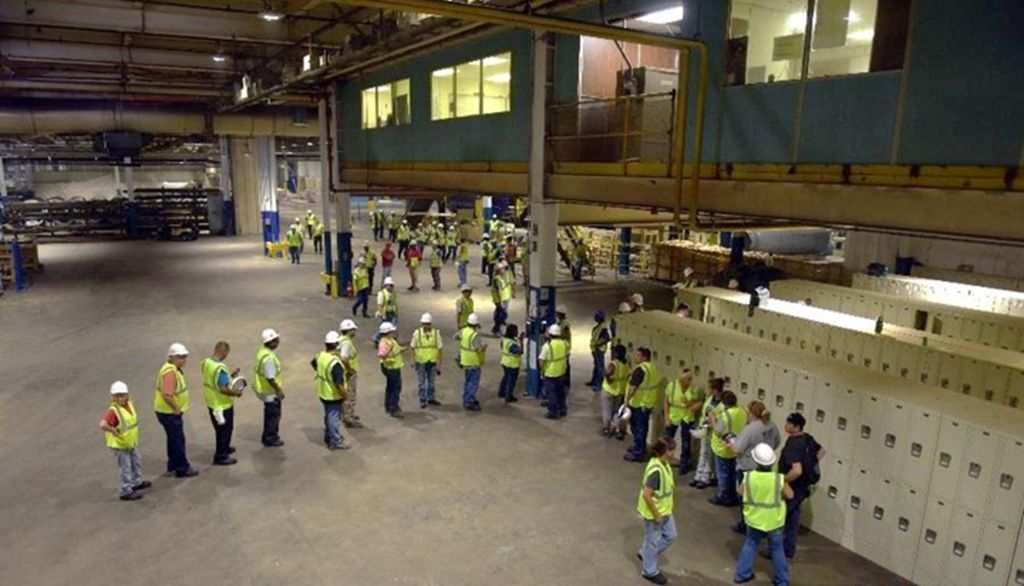
When undertaking retrofit projects involving plants or processing technologies, it is essential to prioritize cost and time efficiency. The amount of downtime required for the project is a crucial factor to consider.
Successful implementation of changes and improvements relies on thorough preparation based on high-quality 3D data. Rushed and inaccurate preparation, as well as execution based on inadequate or incomplete input data, often result in additional time and costs.
Even in smaller-scale projects, achieving cost and time efficiency, along with traceability, remains highly important. Every project should account for unforeseen events by incorporating provisions in the budget and timeline. Although there may be higher initial expenses at the project’s outset, significant savings can be realized in the long run. Additionally, optimized execution time enables a quicker resumption of manufacturing and production tasks, providing a notable advantage.
Regrettably, despite proven evidence, the significance and budget allocation for comprehensive surveys and the production of accurate and complete planning data are often underestimated. Drawing upon our 20+ years of experience, we confidently assert that high-quality foundational data is as crucial as the foundation of a building.
Comparison of 3D documentation and traditional measurement
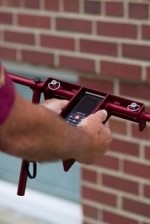
In some cases, tried and tested data collection tools from previous decades are used to generate accurate data. It is indeed true that a straightforward structure can be surveyed using traditional survey equipment. However, over the years, we have encountered numerous clients who initially chose traditional measurement methods but later requested us for a double-check. Ultimately, it was revealed that traditional measurement had errors most of the times and the difference exceeding 10+ cm. While there may be instances where this is not problematic, they are extremely rare. The question always arises regarding the purpose of the survey and the intended use of the resulting documentation.
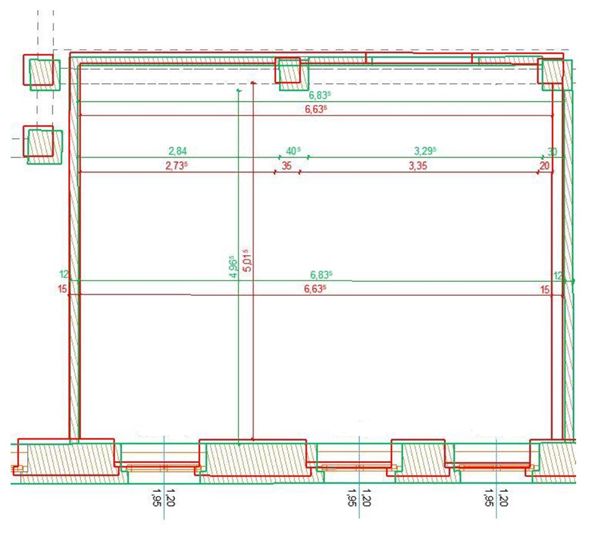
In addition, the time required for surveying a simple facility using traditional technologies is at least 8-10 times longer compared to laser scan-based 3D data capture.
However, when considering typical scenarios in the food industry, where the building is multi-level, complex, segmented, and often includes processing areas filled with equipment and pipelines, the measurement process becomes significantly lengthier, and the rate of inaccurate measurements also increases.
In an operational environment, it becomes essential to conduct surveys not only of the building itself but also of the mechanical systems that necessitate modification and the electrical components that support them. In the case of intricate piping systems spanning several kilometers, along with supporting structures and cable trays, traditional measurement methods are not competitive. The previously mentioned 8-10-fold difference can even multiply further, depending on the complexity of the object.
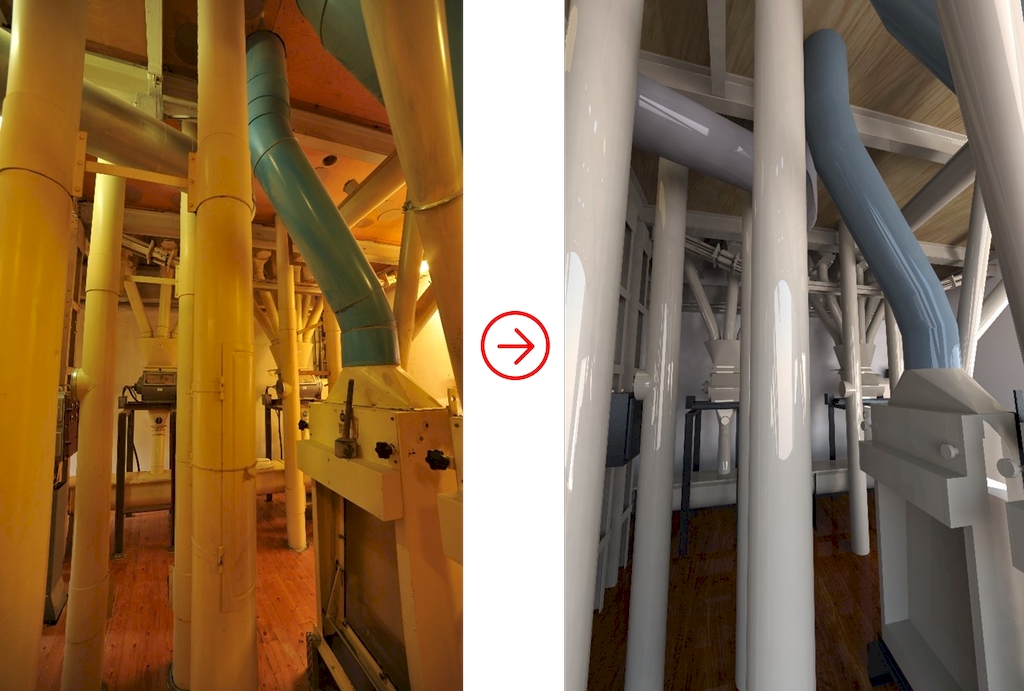 Drawing on our extensive experience and taking feedback into account, we can confidently affirm that laser scanning not only competes favorably with traditional technologies in terms of overall costs but also produces superior quality results in significantly shorter timeframes.
The data obtained through laser scanning offers numerous advantages for verification and quality assurance compared to traditional methods. Moreover, it adds significant value through 3D measurement and processing. During the data processing stage, it enables immediate transparency in identifying building subsidence, roof or wall deformations, and even detecting structural anomalies.
Thanks to continuously advancing technology, data collection can be completed in record time. Our team of expert engineers ensures that the resulting 3D models accurately reflect reality. Explore our projects!