
Definition
What is industry 4.0?
Industry 4.0 encompasses the integration of diverse disciplines, communication methods, and technologies to enhance process transparency, integrate the corporate value chain and supply network, and unlock new levels of value creation through digitization. It represents a convergence of information, digitization, technology, and scientific advancements.
more efficient and competitive production
Transition to Industry 4.0
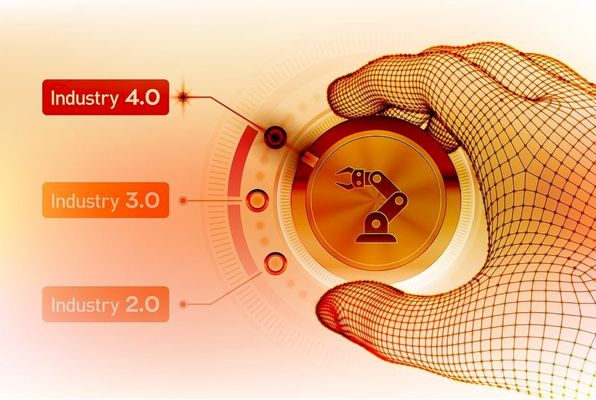
By embracing Industry 4.0, physical constraints become obsolete, paving the way for more efficient and competitive production. Through the digitization of processes, we can achieve greater productivity and competitiveness. Computer-controlled systems and digital twins play a pivotal role in closely monitoring and analysing operations, generating detailed data that empowers decision-making.
Swift and effortless decision-making
Grounded in real world data
Industry 4.0 technologies thrive on the utilization of real-time data, derived from real-world assets and systems, to provide comprehensive and optimal solutions across diverse domains. This transformative process begins with the collection of data from physical assets and systems, which is then digitized for analysis and utilization. By harnessing real-time data, Industry 4.0 enables swift and effortless decision-making, facilitating the identification of optimization opportunities, areas for improvement, and potential regulatory needs. This seamless integration of real-time data empowers organizations to make informed choices and drive operational efficiency.
Importance of bim models
Intelligent communication
Although agriculture and its integrated form with the food industry are not at the forefront of attention when talking about Industry 4.0, there are several compelling examples that showcase their integration. In modern times, the utilization of remote-controlled, satellite-guided machinery, as well as UAVs, has become a widespread practice in agricultural fields.
Furthermore, this level of integration can be successfully implemented on a relatively smaller scale within individual facilities. In fact, a notable advantage is that many Food industry companies have been collecting process data from PLC or SCADA software systems for years. Thus, the collection of process data easier and resulting in a vast amount of existing data available for utilization.
To further enhance these practices, the implementation of smart devices equipped with built-in sensors can facilitate the collection of additional data. The rapidly evolving field of information technology strives to connect a multitude of devices to achieve more precise and efficient task resolution, improved communication, and enhanced data provision. The collaboration of various industrial equipment, vehicles, sensors, smart meters, monitoring systems, and mobile devices serves as a significant support in this endeavour.
Additionally, real-time visualization of the collected data and the 3D representation of the affected devices is crucial, enabling the creation of real-time statistics and understanding the location of a failure.
On site in seconds
Big Data
The field of Big Data is dedicated to processing large volumes of rapidly changing and diverse data. It involves managing information extracted from various sensors and data sources when the data quantity is too large or complex for traditional software to handle. Big Data and Digital Twin solutions like (FRAMENCE) enables the organized recording, storage, sharing, and protection of data, along with powerful query and filtering capabilities. In the food industry, Big Data finds crucial applications in monitoring, data analysis, security, productivity, coordination, capacity, energy efficiency, and technical support, particularly when system-level computation and analysis of data and statistics are required.
An exemplary illustration of this is evident in the production phase, where real-time control of all processes is vital for ensuring the quality and sustainability of the final product. The early warning provided by self-calibrating and instantaneous measuring instruments, through independent measurements conducted by technical and administrative personnel under the framework of Industry 4.0, holds utmost importance for the future of the industry.
Taking into account a survey conducted by Simutech in 2016, which revealed that machine breakdowns in food processing can incur costs of up to $30,000 per hour, it becomes evident that the application of sensors and Digital Twins supporting predictive maintenance integrated into the processes can yield significant returns by preventing machine downtime caused by failures. By leveraging sensor-based monitoring and promoting process transparency, the industry can enhance energy efficiency and reduce waste generation.
Digital Twin in Food Industry
Capturing reality, Digital Twin, their associated technologies and software solutions are currently among the most rewarding and rapidly advancing development activities. Harnessing the potential of these technologies yields outstanding results, making it crucial to place significant emphasis on the digitalization process and the software technology driving it.
A Digital Twins serve as a virtual model that accurately replicates a process, service, or entire plant, mirroring its real-world counterpart. It seamlessly connects the physical and virtual realms, enabling comprehensive analysis and monitoring of every system and offering numerous advantages. It empowers proactive problem prevention, facilitates implementation of improvements through simulations, and enhances planning capabilities. In the food industry, digital twins can be utilized to create virtual replicas and models of food manufacturing processes, and facilities. These virtual representations enable simulation, optimization, improved transparency, predictive maintenance, and eliminate the need for costly site visits. Consequently, they promote efficient operations and elevate product quality to new heights.
Our Framence solution revolutionizes knowledge sharing by seamlessly integrating the continuous connection and communication between various machines, devices, sensors, and the individuals operating them. This system fosters information transparency and provides comprehensive technical support, enabling prompt yet well-informed decision-making. With enhanced precision, reduced error rates, and seamless operation, machines and devices perform defined tasks flawlessly, ensuring a consistent and continuous level of quality in the manufacturing processes.
Pairing the digital twin with the CAFM system
Innovative solutions
Augmented and Virtual Reality
In the realm of digitalization, it is important to highlight the transformative potential of Augmented Reality (AR) and Virtual Reality (VR). These technologies go beyond entertainment and offer significant opportunities for Industry 4.0. They provide innovative solutions for various areas, ranging from factory planning to scenario simulation and customer interactions. AR and VR seamlessly merge the physical world with digital information, creating immersive experiences and unlocking new possibilities.
Augmented Reality enhances the real-world environment by overlaying it with digital elements, enabling users to interact with virtual objects in real-time. It bridges the gap between the physical and digital realms, allowing for seamless integration of information and visualization. By leveraging real-time data from sensors, such as production metrics or IoT devices, AR enhances decision-making and performance optimization. It becomes a powerful tool for on-site processes, such as maintenance and repair, by providing contextual guidance and relevant information directly in the user's field of view.
Virtual Reality, on the other hand, offers a fully immersive and simulated environment that can replicate real-world scenarios or create entirely new ones. It enables training simulations, layout planning, and collaborative design, allowing for efficient evaluation and iteration before physical implementation. VR experiences can be highly realistic, providing a safe and cost-effective way to test and refine processes, products, and interactions.
Taking AR and VR to new heights, FRAMENCE introduces cutting-edge image recognition technologies and AI. Our advanced solutions automatically recognize your location and seamlessly integrate relevant information in real-time and in the right place. With our chat and communication functions, you can collaborate with specialists and experts, enabling instant feedback and support. Moreover, the FRAMENCE platform empowers every user to contribute directly through the digital twin, fostering collective knowledge sharing and driving continuous improvement.
In summary, AR and VR offer tremendous potential for transforming industries and revolutionizing the way we interact with the digital world. With FRAMENCE, we bring these technologies to the forefront, enabling enhanced productivity, streamlined processes, and unparalleled collaboration.