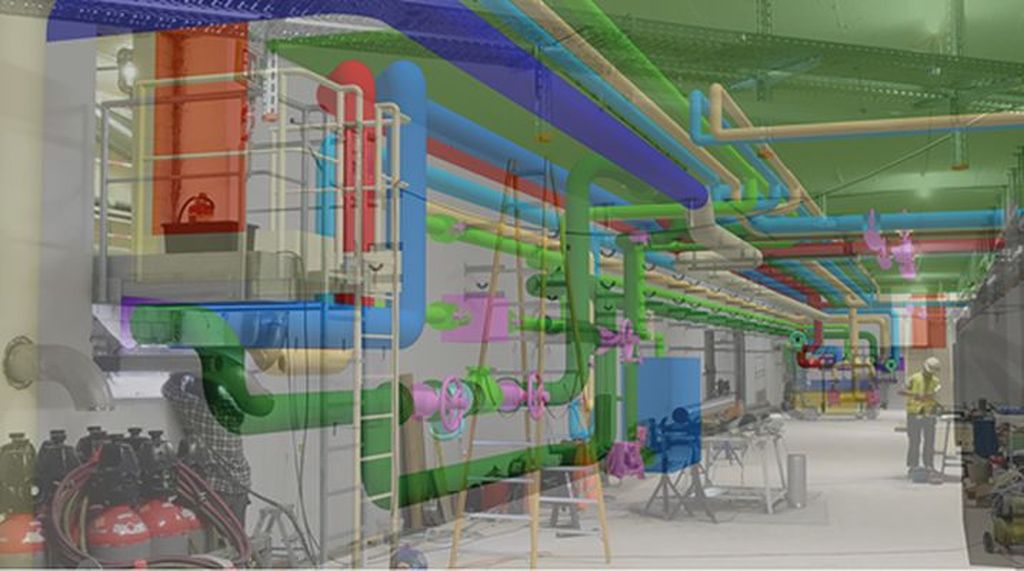
BIM has revolutionized the construction industry, but what exactly is BIM? BIM, which stands for „Building Information Modeling”, is not simply a software, license, or certification, as many people may believe.
It is a sophisticated workflow employed during the design and construction phases of a project. BIM enables the design team, contractors, and owners to collaborate on a 3D model of the building even before actual construction commences. It facilitates simulation and optimization through the use of digital models.
However, one might wonder, since we already use CAD programs, what sets BIM apart and makes it so revolutionary?
BIM distinguishes itself from traditional methods that rely on minimal collaboration, paper-based drawings, and 2D CAD. Unlike 2D drawings, BIM constructs the entire building, along with all its systems, within a „virtual space.” This elevates the design, construction, and operation processes to a significantly higher and more productive level. The added value of BIM extends beyond construction completion, as it continues to benefit the owner in various ways.
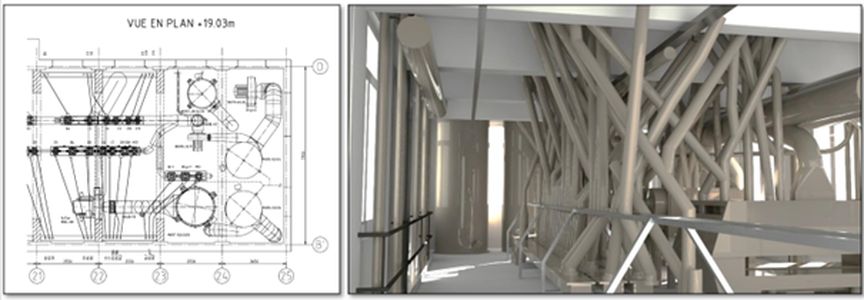
BIM is a cost-saving solution.
During projects, making changes to plans and orders can result in additional costs or even lead to their cancellation. However, what if it were possible to minimize these modifications during the design phase rather than during construction? This is where the power of
BIM technology comes into play. It allows for the early exploration of clashes between disciplines even before construction begins. This proactive approach enables faulty designs to be transformed, and timely solutions to be found for any issues that arise.
By having knowledge of these modifications, work can be prepared accordingly throughout the project, leading to more accurate cost estimation. The utilization of BIM significantly reduces the need for modifications and minimizes the occurrence of last-minute changes. Taking advantage of the benefits offered by BIM can lead to cost savings up to four times the investment in the BIM workflow.
BIM has the potential to save a significant amount of time
As it is widely known, „time is money,” and BIM, by its very nature, enhances project coordination, not only reducing modifications during construction but also promoting extensive collaboration among project team members. By working together with multiple experts and incorporating various perspectives, BIM facilitates more efficient and effective design. Many issues can be addressed and resolved during the design phase, resulting in significant time savings that would otherwise be lost during the construction process.
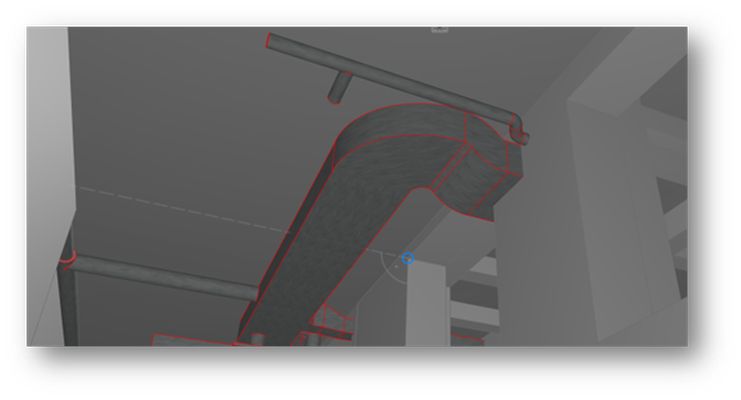
The implementation of BIM has proven to be invaluable in our recent projects. It has played a crucial role in identifying a multitude of clashes between technological and structural elements, as well as highlighting major issues such as the absence of necessary web openings in concrete beams. These discoveries have greatly improved interdisciplinary collaboration, empowering designers and contractors to make necessary revisions to the layout and execute construction seamlessly, without encountering any clashes or setbacks. In summary, BIM has truly revolutionized the construction process by enhancing coordination and facilitating a more efficient and error-free execution of projects.
BIM equips you for the future
After a project is completed, the owner is provided with a comprehensive 3D BIM model that contains a wealth of valuable information and data about the building. This information can be leveraged to achieve further time and cost savings in the future, a goal desired by every building owner.
Managing a new building poses significant challenges. Within the facility, there are numerous pieces of equipment, devices and technological elements, each with its unique maintenance and repair schedule. These components require timely replacements, but before that can happen, their precise locations must be identified, their specific types determined, and the necessary replacement supplies ascertained. This process often involves redundant tasks—visiting the site, conducting inspections, procuring the required items, and returning to the equipment in need of repair. It needlessly consumes substantial amounts of time and energy.
By enriching the
BIM model created during the design and construction phases with relevant data, it can serve as a central coordination hub – a knowledge center – for all operational tasks within a
Computer-Aided Facility Management (CAFM) system. For instance, facility operators can easily access essential information regarding equipment replacement and arrive at the site fully prepared.